An industry that moves 90% of the world’s trade, yet women hold only a small share of its roles.
We knew the statistic. But in November 2023, at an industry event, we saw it for ourselves. Speakers, roundtables, senior figures — and as we looked around the room, the women could be counted on one hand.
That was the moment Women in Ports stopped being an idea and started becoming something real.
02The Problem
You’ve probably been in those rooms too. You look around and notice what’s missing — and you already know what needs to change.
The harder question is how. How do you build genuine pipelines when the networks don’t yet exist? How do you make progress that’s real, not just visible?
These aren’t simple questions. But they’re the right ones to be asking.
03What We Built
We didn’t commission a report. We went to the ports themselves. Across the UK, we gathered data and, more importantly, spoke to the women working in the industry — and the men working alongside them. Terminal directors, harbour masters, engineers, executives. We wanted to understand what they were seeing, whether the gap mattered to them, and what they thought real progress would look like.
What came back was strikingly consistent. The women talked about the barriers they were facing. The men, almost without exception, recognised many of the same barriers — and many were already asking what they could do to help. This wasn’t a women’s issue waiting for women to fix. It was an industry issue, and people across the industry recognised it.
And there was another clear message: the problem wasn’t simply about recruitment. It was about who gets access to the right networks, who hears about opportunities, and how much knowledge gets shared across the sector.
That’s why Women in Ports was built from the inside out. Not as a diversity initiative, but as a professional network—bringing together five areas where the sector needs to make progress: Innovation, Research & Analysis, Advocacy, Knowledge and Future Ports. Led by people who have worked in the industry and understand it from the inside.
When organisations join, they get access to talent across the sector, practical knowledge shared through the five hubs, and a community of organisations that want to see things move forward. We’re not here to tell the industry what to do. We’re here to make it easier to do it.
- Innovation
- Research & Analysis
- Advocacy
- Knowledge
- Future Ports
04Allyship
Women in Ports is for women. Change belongs to everyone.
Men in this sector aren’t bystanders, and they’re certainly not a problem to be managed around. They’re colleagues, sponsors, decision-makers and increasingly some of the strongest allies we have.
Progress won’t happen because women push for change alone. It will happen because men choose, deliberately and repeatedly, to push alongside us.
Picture what that actually looks like day to day. A CEO rethinking how the company hires. A senior manager taking on his first female direct report and genuinely mentoring her. A board member willing to ask the harder question in the room. A harbour master who notices who’s staying quiet and makes room for them to speak.
That’s allyship. It’s practical, specific and consistent. And it matters just as much to the outcome as the work women are doing themselves.
We build with them, not in spite of them. Our events are mixed. Our hubs are mixed. And our partners bring the people best placed to make change, whoever they are. Increasingly, that means men who look at the status quo and decide it isn’t good enough. Real change won’t happen with women working alone. It will happen when the whole sector, men included, decides to change it and do it together.
Bring your team. Bring your questions. Bring the colleagues you want to see go further.
That’s the work. And it doesn’t happen without you.
05The Founder
Why we built this — and why 2026 is the year it matters.
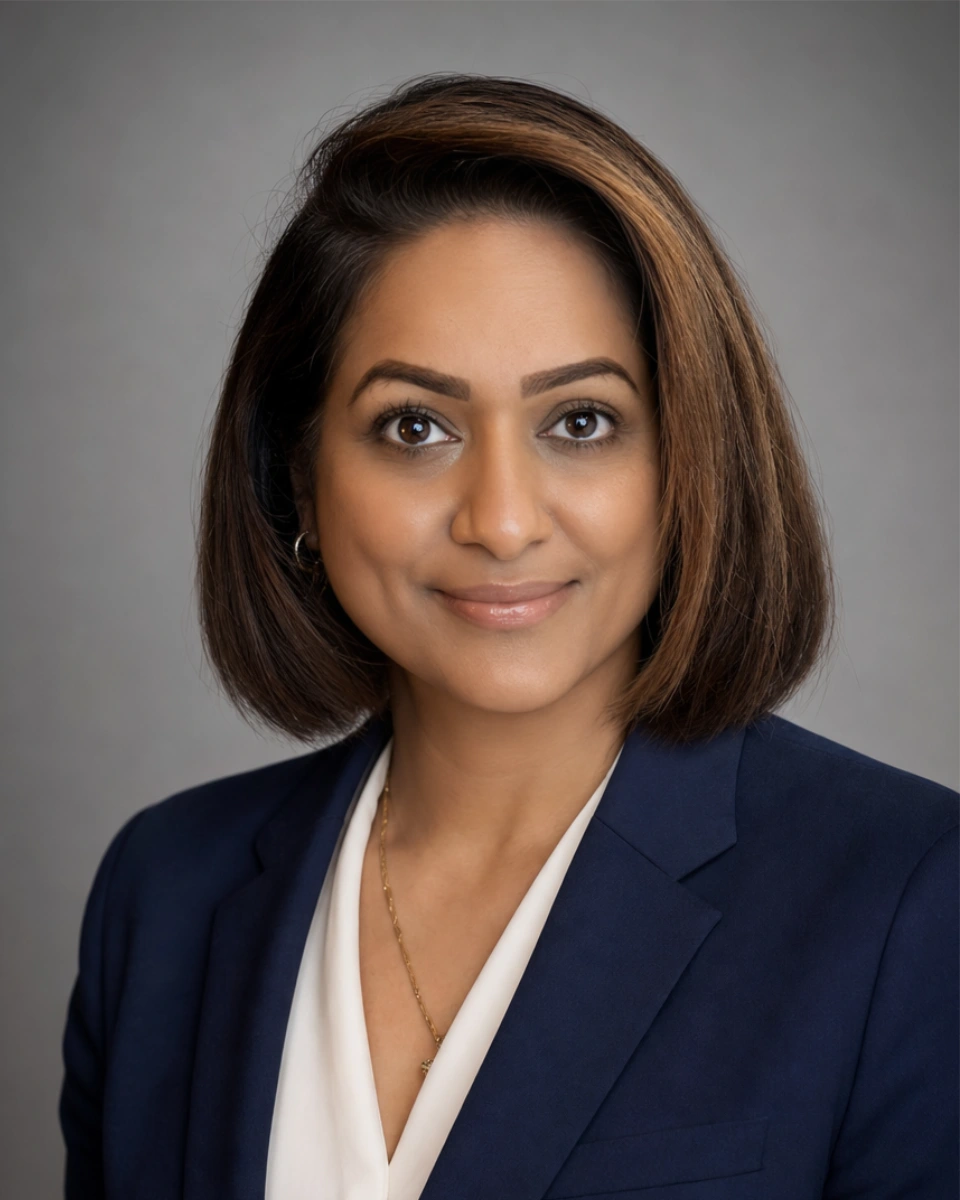
In November 2023, Raj Kehal walked into an industry event and looked around the room.
There were hundreds of people there. Leaders, operators, decision-makers from across the ports and maritime sector. And five women.
Not five percent. Five people.
Raj had a comfortable career. The kind most people spend years building and wouldn’t risk lightly. She had a choice — keep it, or do something about what she’d just seen.
She chose purpose. And Women in Ports was born.
“I didn’t start Women in Ports because it was the smart career move. I started it because I looked around a room full of the people running global trade and couldn’t see the people who should have been there. That’s not a diversity problem. That’s a performance problem.”
2024 — The evidence.
We spent a year gathering data from across the UK — talking to women and men alike. Because in an industry where men hold most of the positions of power, lasting change requires their understanding and commitment too. Not just their permission.
2025 — The solution.
Armed with the evidence, we built the response — five strategic hubs, a global community, an academy, and the infrastructure to make change systemic rather than symbolic.
2026 — The acceleration.
The community is growing. The work is live. This is the year Women in Ports moves from building to scaling — and the moment for organisations serious about change to get involved.
06The Team
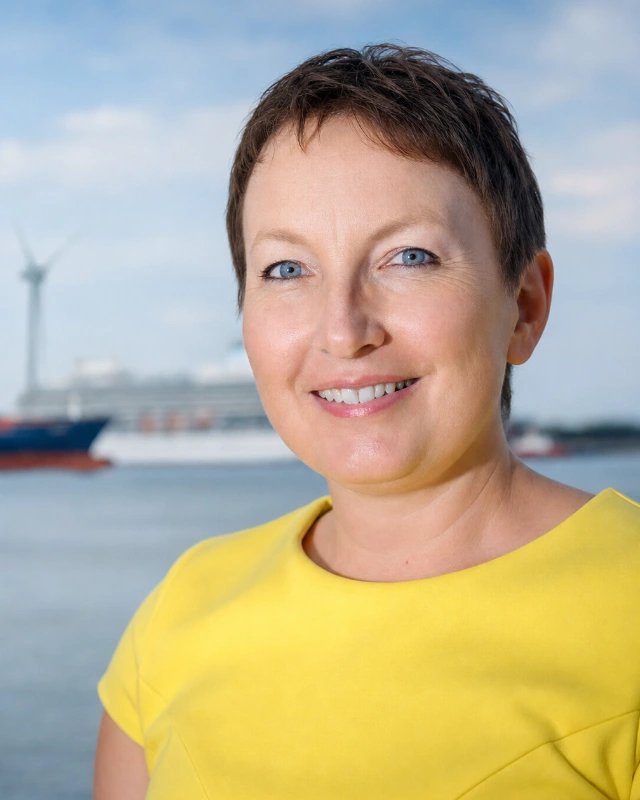
Sarah Robinson BEng MPhil CEng MICE
Chief Operating Officer
Sarah Robinson is Chief Operating Officer at Women in Ports and a Chartered Engineer with more than 25 years’ experience across the maritime and construction sectors. She has worked with international maritime organisations, national authorities and infrastructure owners, bringing practical expertise in navigation safety, navigational risk assessment and marine aids to navigation (AtoN).
Her experience spans strategy, policy, planning, design and operational optimisation, combining technical standards with a strong understanding of how maritime operations work in practice. Sarah also designs and delivers international training programmes, helping maritime authorities and industry professionals strengthen their knowledge of navigation safety and regulatory requirements.
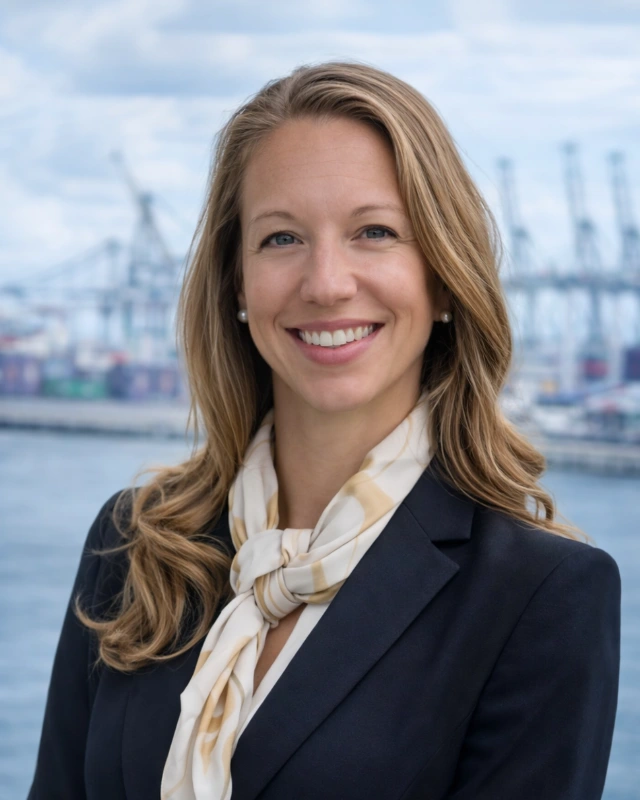
Naomi Vanderstockt
Global Head of Knowledge Hub
Naomi Vanderstockt is Global Head of Knowledge at Women in Ports, leading the Knowledge Hub and Women in Ports Global Academy. A Master Mariner Unlimited with 16 years in maritime, including almost 14 years at sea, she has held senior operational and safety roles across cruise ships, LNG carriers, dredgers, tugs and tall ships.
She is also founder of Caerulea, a maritime risk, education and professional-development practice and academic partner to the Women in Ports Global Academy. Naomi is certified in the IALA Risk Management Toolbox and as an IWRAP Superuser, and is a court-appointed maritime expert witness. She serves on international maritime working groups and teaches leadership and high-consequence decision-making at universities in Belgium.
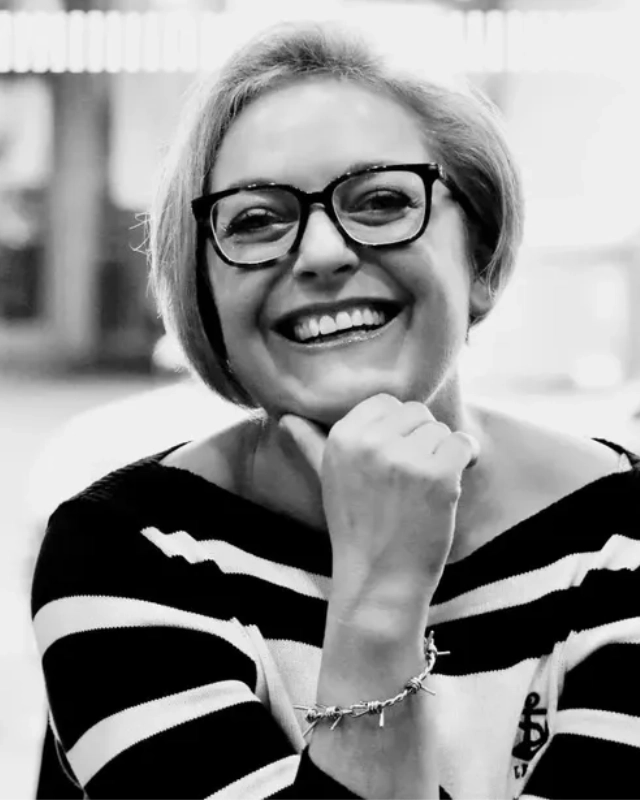
Emma Mark
Schools & Industry Partnerships Lead
Emma Mark is Schools and Industry Lead at Women in Ports and founder of EJB Maritime, with almost 16 years’ experience across maritime operations, commercial leadership, organisational change and training. She specialises in maritime culture, retention and behaviour change, including SASH prevention and response, psychological safety and reporting confidence.
An ICF Associate Certified Coach with 400+ hours of coaching experience, Emma supports women across maritime from cadets to CEOs. She also delivers SASH at Sea training at Warsash Maritime School, reaching 255 cadets in 2025/26. Through EJB Maritime, she helps organisations turn policies and values into safer behaviours, stronger leadership and cultures where people feel able to speak up.
The port sector is changing. Be part of shaping what it changes into.
Women in Ports is at the beginning of something significant. The data is there. The foundations are in place. And the community is growing.
What happens next depends on the organisations and people willing to move beyond good intentions and into action.
Takes 2 minutes · No cost, ever · Open to individuals and organisations globally
Talk to us about organisational membershipFounded in 2024. Built on evidence. Backed by a global community committed to making ports genuinely high-performing places to work.